
Field Notes: March 2026
Moving, blood donors, online pharmacy scams, and more!


Dear Readers,
After the excitement of accepting my new job comes the less pleasant part: Getting ready to sell our house and relocate to a new state over a thousand miles away. For the past few weeks, my life has become all about boxes—sorting clothes, books, and random collectibles into a million cardboard containers. Moving consistently ranks as one of the most stressful life experiences, often beating out divorce, birth of a child, and other stressors. That shouldn’t come as any surprise as moving is disruptive and expensive. It requires coordinating realtors, cleaning, packing, selling or donating old stuff, working with movers, trying to secure new housing on a tight deadline. You’re also leaving behind a lot of friends and memories. What I try to keep in mind is that as horrible as the process is, eventually it works itself out and becomes a distant memory as you start a new chapter elsewhere. The only way out is through.
For this month’s Field Notes, I have several things of interest to share. The first main story actually makes me really angry, and concerns a fly-by-night online medication scam that hurt dogs across the country. The second main story is a personal one about the importance of blood donations in vetmed. Then, there are links and short blurbs to a handful of other neat articles I came across in recent weeks, including updates on the Dog Aging project, studies about AI in dentistry, and more. I hope you enjoy!
—Eric

Beware shady pet pharmacies!!!
This is a disturbing story about online pet pharmacies selling unsafe drugs to that should serve as a warning to both pet owners and veterinarians alike. First reported by VIN News, an online retailer calling itself WagLabs was selling a number of medications without a prescription, including one purporting to be cyclosporine, a powerful immunosuppressive drug often used to treat dogs with skin allergies and other serious conditions:
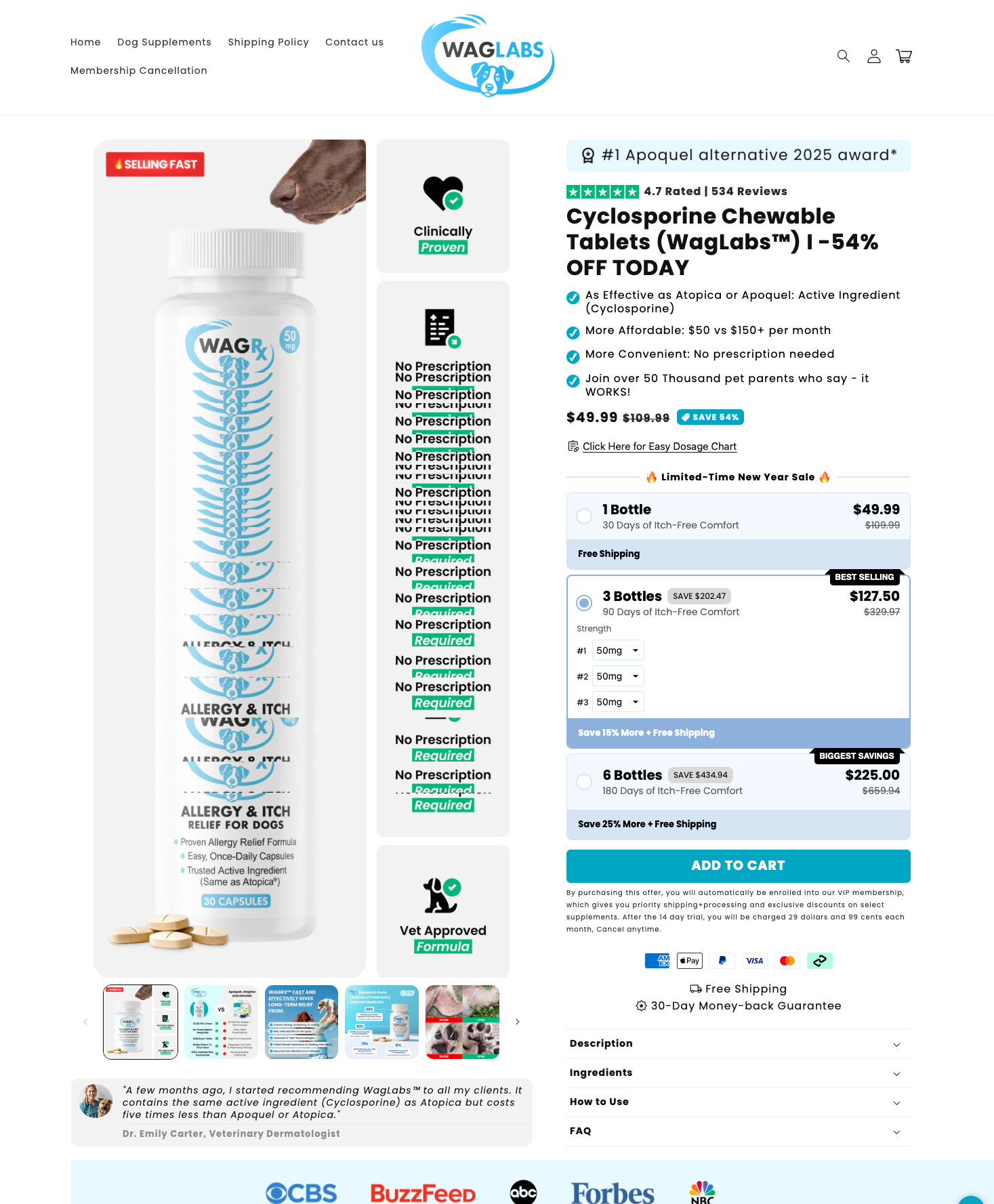
The listing above claimed to be endorsed by a veterinary dermatologist named Dr. Emily Carter. There’s just one problem: There is no veterinary dermatologist by that name! In fact, the accompanying headshot is a stock photo, and neither VIN news nor others who investigated could find evidence that such a vet even exists.
The problems went beyond the fake endorsement. Many pets treated with this “cyclosporine” from WagLabs reported serious side effects, including increased thirst, urination, and liver enzymes, among other symptoms. According to a similar story by the California Veterinary Medical Association, at least one pet was euthanized due to organ failure after taking those pills 😔
The American College of Veterinary Dermatology (ACVD) became aware of this problem in late January and filed a complaint with the FDA. While I could not find any response from the FDA, WagLabs stopped selling “cyclosporine” in mid-February, and looking at their website today, they no longer appear to be selling any products:

The original story was updated on March 25th:
VIN News has learned that a pet owner in North Carolina this month submitted a WagLabs product labeled as a 50 mg cyclosporine tablet to a laboratory for testing. The results, provided to VIN News by the pet's veterinarian, show the lab detected only one major substance: dexamethasone. Dexamethasone is a potent corticosteroid used in human and veterinary medicine. In the U.S., it is approved as an anti-inflammatory agent for dogs and other species. A prescription is required for use. As of this update, the WagLabs website no longer shows any products for sale.
Many vets online already speculated that the drug might be prednisone, dexamethasone, or another steroid, because of the adverse effect profile and the fact that it can effectively treat skin disease (and many other conditions). Furthermore, generic steroids are dirt cheap so—if you were an unethical sociopath—you could attempt to pass it off as a much more expensive drug like cyclosporine or Apoquel, sell it at steep “discount” and still make an enormous profit. Some dogs might even get better, although it appears the dosing of this powerful drug was extremely high.
In my opinion, there is a special place in Hell for folks who are willing to hurt animals to make a quick buck 🤬 All we can do is be on the lookout for unsafe medications online. Red flags that should alert you to (potentially dangerous) scams:
Not requiring a prescription for Rx drugs
Prices that seem too good to be true (they probably are !!!)
Selling supplements that claim to be safer and more effective than real drugs
Endorsements by vets without a paper trail showing any appropriate credentials
This is a growing problem, see: “Did a fake veterinarian sell you something? You’re not alone”
Giving and Receiving Blood
Last summer I wrote about the importance of animal blood donors:
Despite the need, pet blood donation is not well understood by the general public, nor are many owners aware that it’s an option. According to a study conducted in the UK, 70% of the 158 pet owners surveyed were not aware their animals could donate blood, but 89% of respondents indicated they would be willing to volunteer if their pet was an eligible donor
Just a few weeks ago, we experienced the lifesaving benefit of transfusions in one of our own pets. While my wife and I were in St. Kitts, her mom’s dog Benjamin stopped eating and was acting very depressed. He had bruising all over his abdomen, little pinpoint bleeds on his gums, and his stool looked like tarry coffee grounds. When his vet checked a CBC, his platelet count was zero. He had developed Immune-Mediated Thrombocytopenia (ITP).
Benjamin was transferred to a specialty hospital where they started steroids and vincristine. Despite this, his platelets refused to budge and he kept bleeding for days. They were able to make him feel better by giving him some fresh blood:
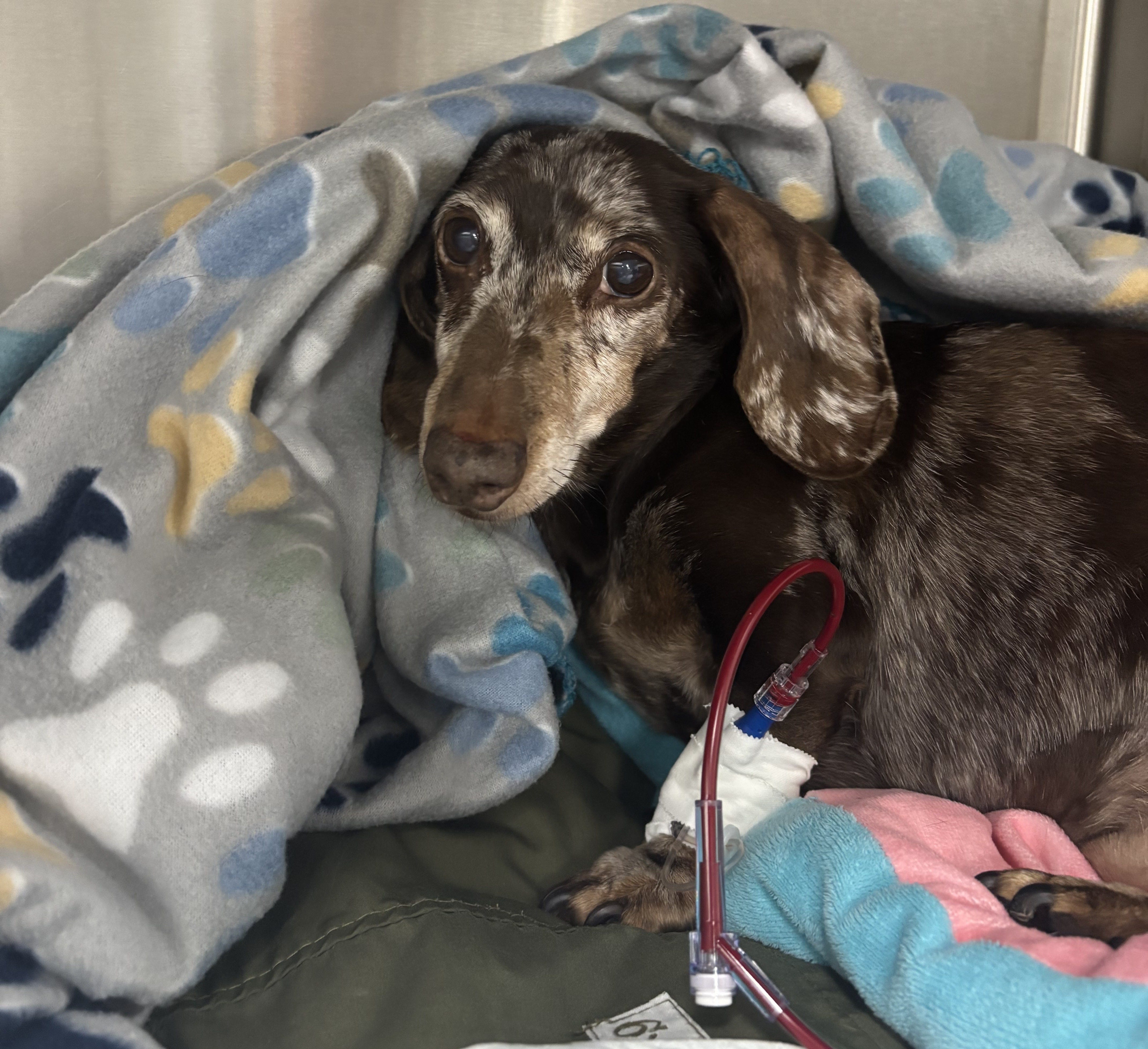
His condition was touch and go for a bit, but I’m happy to report he turned a corner after that first week. His platelets normalized, the bleeding stopped, and he started to feel like himself again! Today Benjamin is back to wolfing down his food and snuggling with his mom 😊
As I’ve previously mentioned, we enrolled both our cats in BluePearl’s blood bank program. They each recently donated, and both of their units of pRBCs were used within days! One cute new touch they’re doing is sending the owners of recipients cards “from” the donors with a picture and brief bio. The contrast between the photos of Bert posing handsomely and Ernie messily devouring a Churu treat sums up their personalities better than words ever could 😸


You can read more about animal blood banking here:

What I’m Reading
Before I go, here are a few other interesting stories you might want to check out:
“When AI Misses the Diagnosis... who gets sued?” — This LinkedIn newsletter post by Substack vet Michele Pfannenstiel DVM is a great companion piece to my last article on the JAVMA study evaluating radiology AI. Her piece focuses on AI applications for dentistry, and she provides a great list of tough questions to ask sales reps who pitch you these products
“No, ChatGPT did not cure a dog’s cancer” — Several people have asked for my thoughts on this viral story about an Austalian tech entrepreneur who claimed to have cured his dog’s cancer with a personalized mRNA vaccine “designed by” ChatGPT. As you would expect, the reality is far murkier: (a) The dog had multiple tumors (at least one was a mast cell tumor, grade/stage unclear), (b) they shrunk some but are still present, (c) the dog was also given a powerful immunomodulatory drug used in people at the same time, and (d) scientists actually designed the mRNA vaccine using multiple tools, and ChatGPT really just served as a research springboard like Google would have a few years ago
“Recent Results From the Dog Aging Project” — Dr. Nancy Kay who writes Speaking for Spot provides a great summary of studies that are coming out of the Dog Aging Project, including risk factors for GDV (aka a “twisted stomach,” a life-threatening emergency), how dogs respond to home-prepared and raw diets, and insights into canine cognitive dysfunction (analogous to Alzheimer’s)
“There’s a Good Reason You Can’t Concentrate” — In this NYT Op-Ed, computer scientist Cal Newport, who wrote Deep Work and Slow Productivity, makes the case that we need to treat technology disrupting our ability to focus and think like previous public health campaigns to stop smoking, start exercising, and eat a heart-healthy diet. He cites a number of studies showing that school bans on smartphones and changing how we use AI chatbots can result in promising improvements
Author’s Note: The commentary above represents my personal opinion and does not necessarily reflect the viewpoints of any current or previous employers.