
The "Good Hodgkins"
When a cancer diagnosis *isn't* terrible news

Dear Readers,
Imagine you take your cat in to the vet because you noticed a large lump growing under his jaw. The vet takes a look and goes “Hmmm…” in an ominous tone of voice you don’t like. They say there are several benign explanations, like a reactive lymph node or an abscess, but that another possibility is a tumor. Your vet obtains a fine needle aspirate (FNA) sample to send off to a pathologist like me. A few days later, they call with seemingly bad news: It’s a type of cancer called lymphoma.
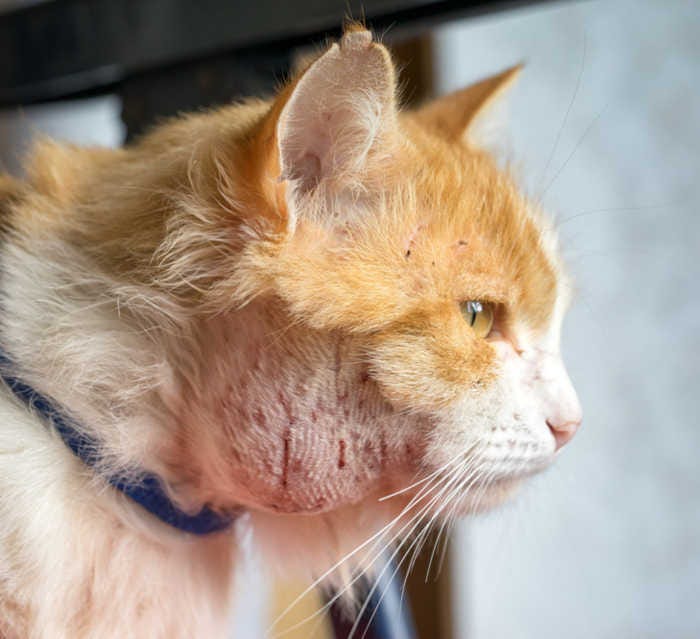
While you might be crushed and assume the worst, you really need to know what exactly you are dealing with—not all types of lymphoma are created equal, and some are less aggressive while others carry a grave prognosis.
One example of the former would be something called Hodgkin’s Disease, or more precisely, Hodgkin lymphoma, which is a type of blood cancer that is highly treatable with a 5-year survival rate of around 90% (especially if caught early). This is in contrast to all of the other variants, which are lumped together broadly as non-Hodgkin lymphoma (NHL). Viewers of the HBO comedy Curb Your Enthusiasm may be familiar with this distinction: In one episode, there is a running gag where Larry David repeatedly offends people by downplaying a character’s cancer diagnosis as no big deal because it’s “the good Hodgkins.”
What IS Hodgkin-like lymphoma??
Hodgkin’s lymphoma was first described in 1832 by Dr. Thomas Hodgkin when he evaluated several patients with painless swellings of their lymph nodes, sometimes accompanied by fever, lethargy, weight loss, and other symptoms. It is considered one of several types of cancer where a cure is possible, and several famous people have been in long-term remission of Hodgkin’s disease, including Microsoft co-founder Paul Allen, professional hockey player Mario Lemieux, and actor Michael C. Hall, who played Dexter on the eponymous series.
About half of cases of HL are associated with Epstein-Barr virus or other infections. In fact, recent research suggests the disease develops when the immune system gets confused responding to a threat and goes into overdrive:
Weill Cornell Medicine researchers have demonstrated, for the first time, that Hodgkin lymphoma cancer cells from patient samples are immune cells stuck in an “identity crisis.” […] The findings, published April 22 in Blood Cancer Journal, reframe Hodgkin lymphoma as a cancer of failed cell development, rather than simply uncontrolled growth, and suggest new diagnostic biomarkers to distinguish it from other related non-Hodgkin lymphomas.
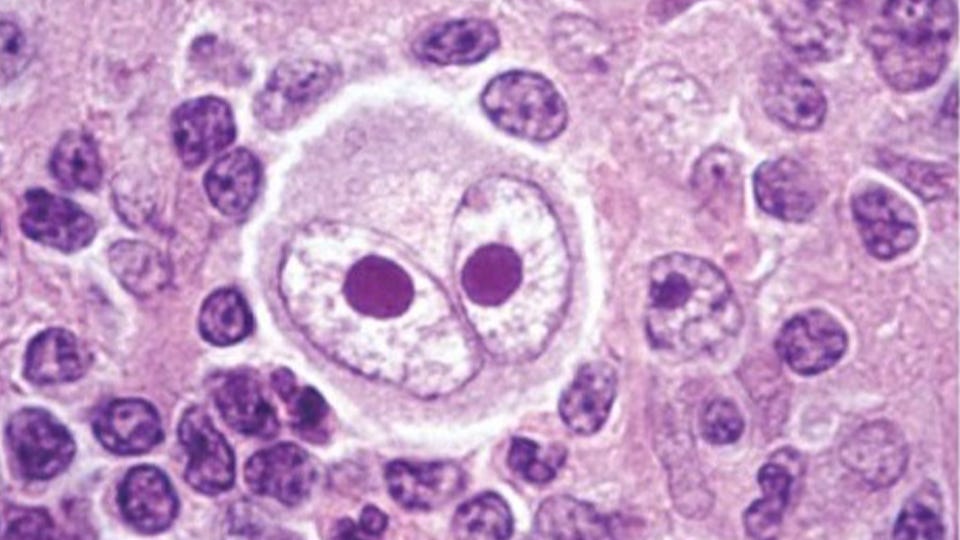
Why am I bringing up a sitcom reference to people with lymphoma on a veterinary newsletter?? Believe it or not, cats actually develop a similar syndrome that has been dubbed Feline Hodgkin-like lymphoma (FHL) or simply Hodgkin-like lymphoma (HLL)1. While most pets and domestic species with lymphoma live an average of 9-12 months despite multi-agent chemotherapy, cats with FHL can survive for YEARS. However, pet owners—and even many vets—are generally unaware of this entity, and may jump to inappropriate decisions like aggressive medical care or even euthanasia when they see “lymphoma” on a report, so I want to raise awareness.
Clinical and pathology findings
FHL is not only more indolent than typical forms of lymphoma, it also looks different in the exam room and under the microscope. Here is a short summary of the features:
Usually affects one or only a few lymph nodes (often in the head or neck region)
Most other forms of lymphoma in pets cause enlargement of lymph nodes throughout the body and present as Stage III or higher
Nodes may wax and wane in size over time
Mild, if any, systemic signs of illness
Slowly progressive → prolonged survival without aggressive treatment
Microscopic pathology findings:
Loss of normal node architecture
Large neoplastic lymphocytes within a mixed, reactive background
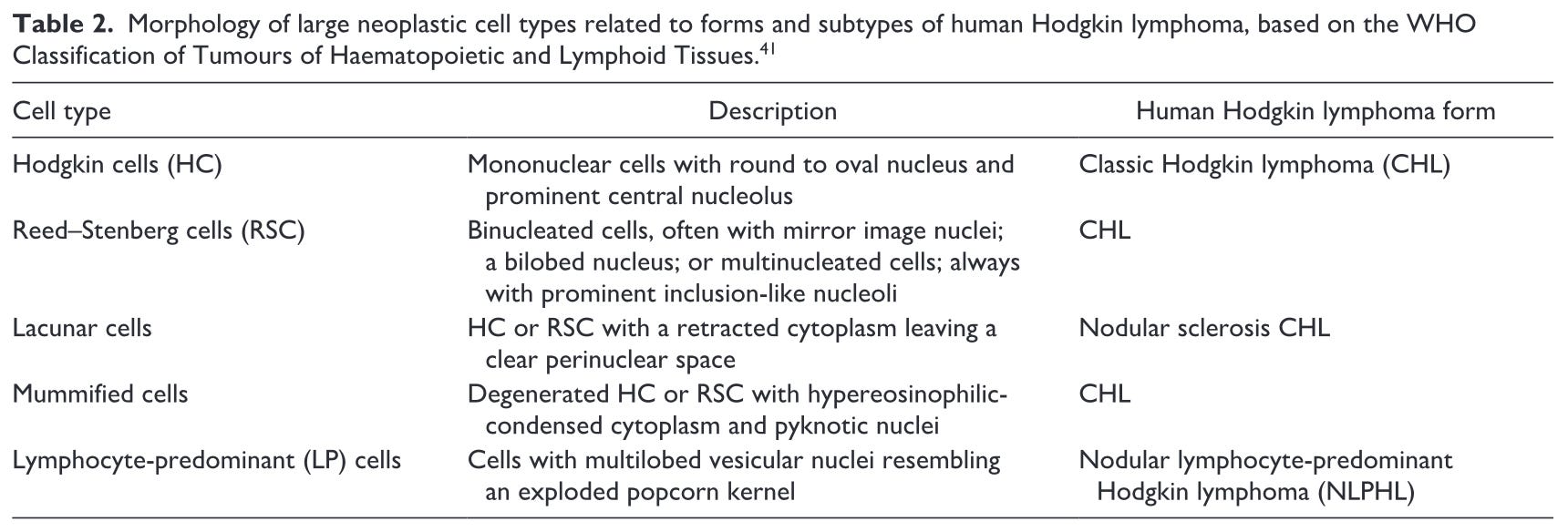
Presence of characteristic binucleated or multinucleated cells (see Table 2)
Here are some examples of RS and Hodgkin cells from a cat with FHL:


While the results vary a little between studies, special stains (such as immunohistochemistry) generally reveal that FHL is made up of a mix of neoplastic B-cells/plasma cells on a background of reactive but non-cancerous T cells. The large multinucleated Hodgkin and RS cells were once thought to be histiocytic in nature based on their appearance, but two studies found they were negative for macrophage marker IBA-1 and variably labeled with B-cell marker CD20. Many of the cells also express CD30, a marker of activation in both B and T lymphocytes, which fits the idea that HL/FHL is a case of an immune response gone haywire.
For the molecular clonality test PARR, results are often quite messy. Some cats with FHL have clonal B-cell results, while many have ambiguous or polyclonal results (presumed false negatives). I could not find data on flow cytometry for FHL, but I would assume it is also mixed and confusing.
Treatment and prognosis
In one small case series of cats with FHL, the median age was 7 years old, the gender ratio was 50/50 for males/females2, and the most frequent breed was domestic shorthair (~80%, although this is the most common cat breed in most countries, so I’d expect it to be overrepresented). All cats in the study had stage I disease (single node affected) with surgery to remove it and histopathology for definitive diagnosis. Around half of cats were asymptomatic, while about a third had decreased appetite and weight loss, and a few had other issues.
Long-term clinical follow-up was available for 10 of the 24 cats, none received chemotherapy. For 8 of those 10 cats, they were still in remission at the end of the study, with a median survival of 956 days (range 700 - 1,323). Two cats had progressive disease, though both owners declined additional treatment, and those patients died at 145 and 233 days. The generally favorable prognosis was similar to an older retrospective study by Walton et al, although a higher proportion of those cats were lost to follow-up or had euthanasia for reasons unrelated to lymphoma.
Summary and further reading
So in conclusion, cats get a unique form of Hodgkin-like lymphoma that is not terrible news. They tend to live a long time, especially if the abnormal node was removed with surgery. While FHL is considered uncommon to rare in cats, I suspect it is likely underdiagnosed due to lack of awareness and the unusual pathology findings.
FHL can be challenging to diagnose, and the best tests are a combination of cytology, histopathology, and IHC (“special stains”); I would generally discourage PARR or flow cytometry. If you are concerned that your cat has FHL instead of something more aggressive, it would be best to get a second opinion consult from a pathologist with a special interest in hematopathology and lymphoma subtyping.
For further reading on the importance of advanced lymphoma testing and classification, check out some of these other All Science articles:


References
Cottingham K. Understanding Hodgkin lymphoma cell origins could yield better diagnostics. Cornell Chronicle, April 24, 2026. Accessed 5/14/26.
Foiani G, Dell’Aere S, Vascellari M, Tiracorrendo F, Ghisleni G, Rigillo A, Perfetto S, Melchiotti E, Carminato A, Bianchi GBM, Roccabianca P. Feline Hodgkin-like lymphoma: A morphological, immunohistochemical, and molecular study. Vet Pathol. 2025 Nov;62(6):890-901.
Marconato L, Maga I, Iussich S, Benali S, Aresu L. Histologic, Phenotypic, and Molecular Characterization of Feline Hodgkin-Like Lymphoma With Classical Reed-Sternberg Cells. Vet Comp Oncol. 2024 Dec;22(4):574-580.
Newton JA, de Vicente F, Haugland SP, Scase TJ, Helm J. Extra-nodal subcutaneous Hodgkin’s-like lymphoma and subsequent regression in a cat. J Feline Med Surg. 2015 Jun;17(6):543-7.
Walton RM, Hendrick MJ. Feline Hodgkin’s-like lymphoma: 20 cases (1992-1999). Vet Pathol. 2001 Sep;38(5):504-11.
Author’s Note: This article is for educational purposes only and does not constitute medical advice. Nor does it necessarily reflect the viewpoints of any current or previous employers.
Hodgkin-like lymphoma has also been rarely reported in ferrets
This is interesting as HL is more common in men than women, although we have far fewer studies in veterinary medicine, and they are much smaller, so it is hard to draw definitive conclusions