
A Cry for Help
Vet clin path is a specialty in *crisis*


On Monday, my specialty’s journal Veterinary Clinical Pathology published a bombshell study with the ironically anodyne title “European Veterinary Clinical Pathologists Workplace Wellbeing Survey”1. In my opinion, the results of this survey should be a wake-up call to anyone who uses or runs a veterinary diagnostic lab, because they paint a picture of a specialty in crisis.
The authors sent their 32 question survey to members of the European Society of Veterinary Clinical Pathology and Diplomates of the European College of Veterinary Clinical Pathology in 2024 and 2025.2 As the two organizations overlap somewhat, respondents were only able to fill out the form once. The response rate was 75%3 for pathology specialists (n=92) and 43% for residents (n=13). The employment sectors of the participants included commercial diagnostic lab (41%), academia (37%), private specialty clinic (20%), and 1% each for drug company and government agency.
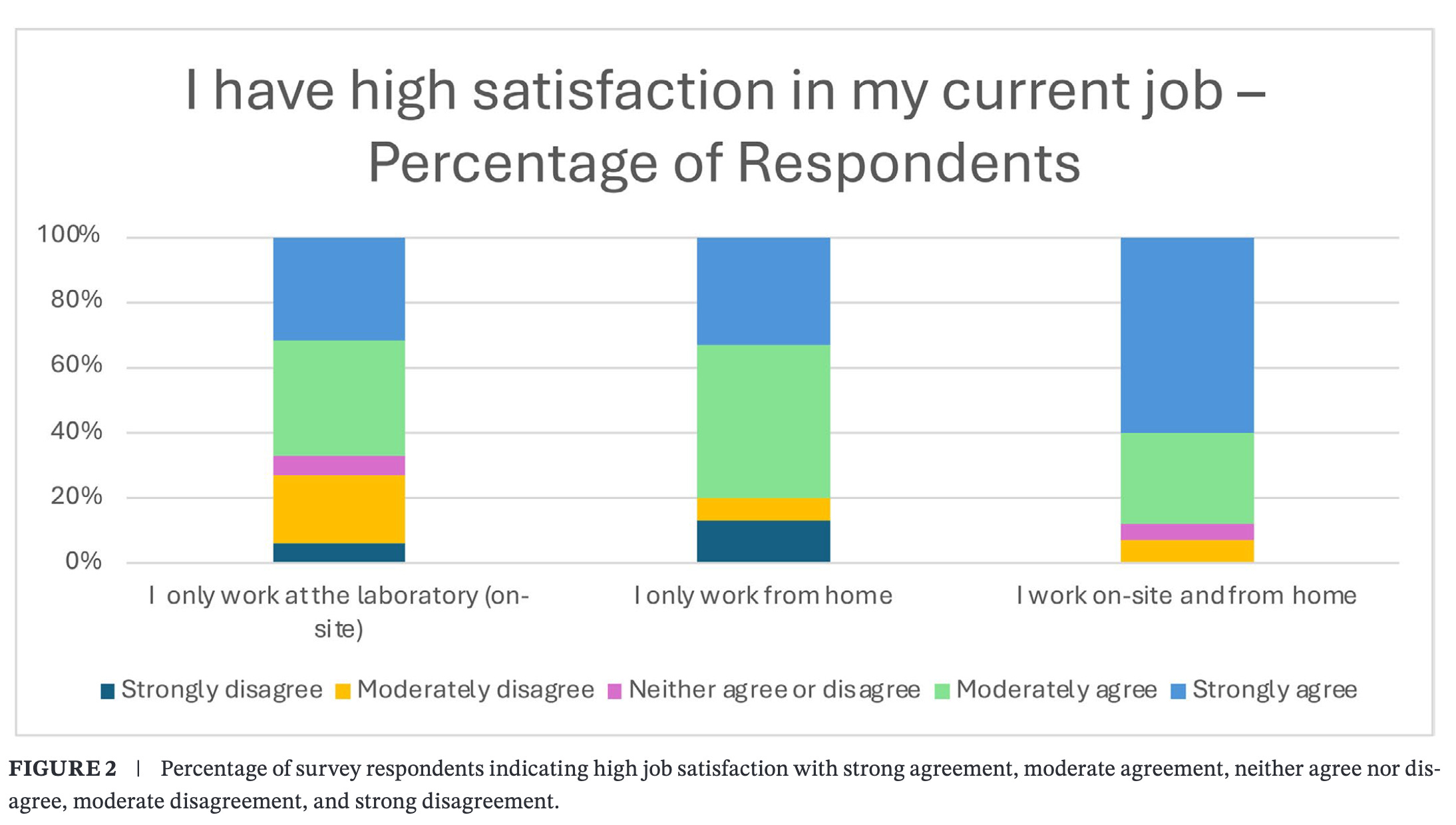
How satisfied were they with their profession? The results were… not great. Across the specialists, less than half (46%) strongly agreed with the statement “I have high satisfaction in my current job”, while 34% expressed moderate agreement. One in five (20%) were either neutral or dissatisfied. As Figure 2 below shows, the results get even more interesting when you subdivide them by their work setting. Perhaps unsurprisingly, the cohort with the highest overall career satisfaction held a hybrid role, working a mix of remote and in-person. In contrast, only 1/3 of those who worked either 100% at home or fully on-site were highly satisfied. The remote-only group also had more people who were strongly dissatisfied. Some possible explanations could include the effects of isolation or loss of consultation with colleagues. It could also be the case that the 100% remote folks are more likely to be reading high-volume cytology for big commercial labs, versus academia/independent.
Besides work setting, what are some of the other factors contributing to these less than stellar scores with their careers? Several themes jumped out at me, including burnout, low pay, and feeling like they were not utilizing their training.
Burnout
A stunning *64%* of the specialists said that they had experienced burnout or been close to it on at least one occasion! The rate for resident trainees was—surprisingly, perhaps—lower, but still almost 4 in 10. Many respondents expressed frustration at long hours, excessive case volumes, and aggressive productivity benchmarks. Only 62% of specialists agreed that their daily workloads were reasonable, and 1 in 10 strongly disagreed. Some attributed these issues to organizations that prioritized profit, as well as labor market mismatches:

In addition to the obvious concerns about work-life-balance and mental health, several worried that the caseload demands compromised diagnostic quality:
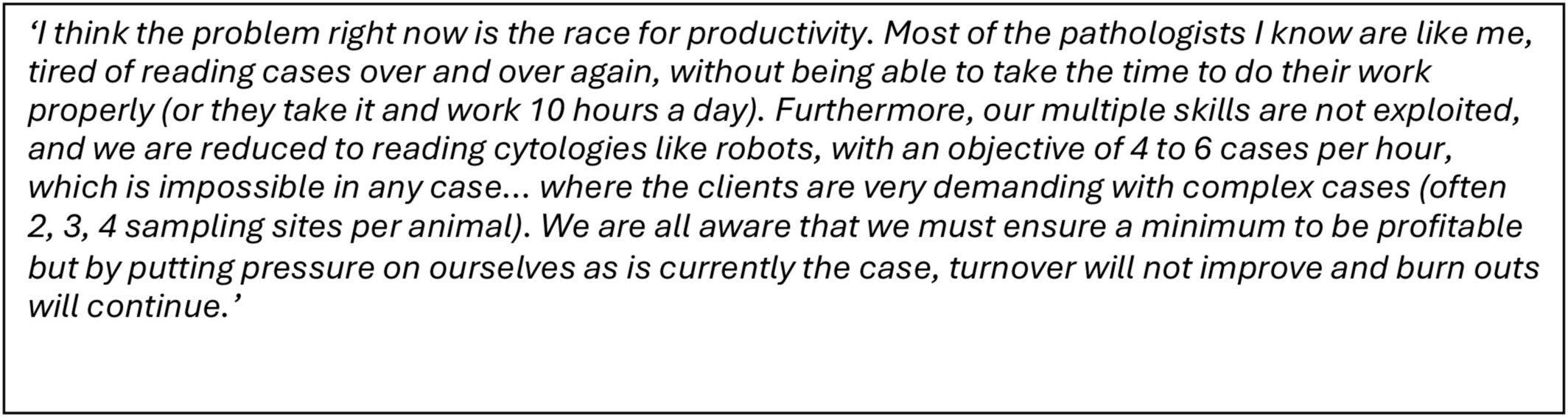
These complaints did not surprise me. A few weeks ago, I wrote about the high caseloads in diagnostic labs and how many organizations put the burden of efficiency on individuals despite counterproductive policies that slow them down:
“Minimum caseload benchmarks are often 40-50 cases a day, and if every case had only 3 slides—many cases had more—you’d be looking at 120-150 [slides/day]. It’s worth pointing out that such high caseloads would literally be illegal in the world of human medicine (at least in the US)—Regulations published by the Centers for Medicare and Medicaid Services cap the number of cytology slides evaluated every day at 100.”

Low Pay
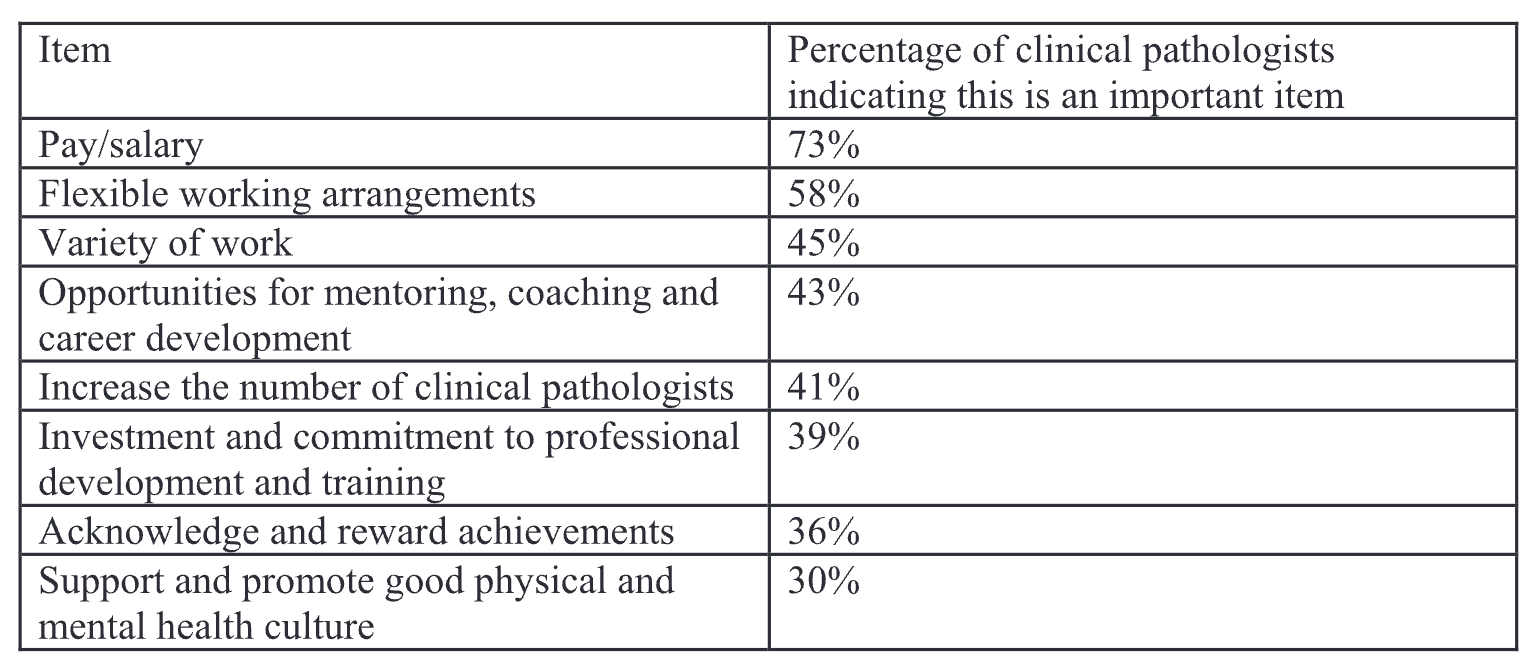
As bad as the burnout scores were, the single most important concern for this group of clinical pathologists was compensation, substantially beating out the next runners-up of hybrid work and task variation:
Believe it or not, some pathologists in Europe are paid as little as €6 case! Even in the US, there are clinical pathologists compensated between $10-15/case. One expressed bitterness at being paid so much less than other specialists:

Note: I want to acknowledge that in the following paragraphs, the compensation numbers you see may seem high in a vacuum, but you have to remember these folks are highly-trained medical professionals that have hundreds of thousands of dollars in educational debt that required 12+ years of education.
We face similar issues in the North American market. Every few years, the American College of Veterinary Pathologists conducts a salary survey, and the most recent one was published in 2023. While I don’t think I’m allowed to share the specific internal data, I can show you publicly available salary data from the AVMA and tell you that the typical clinical pathologist now makes less than the average general vet:
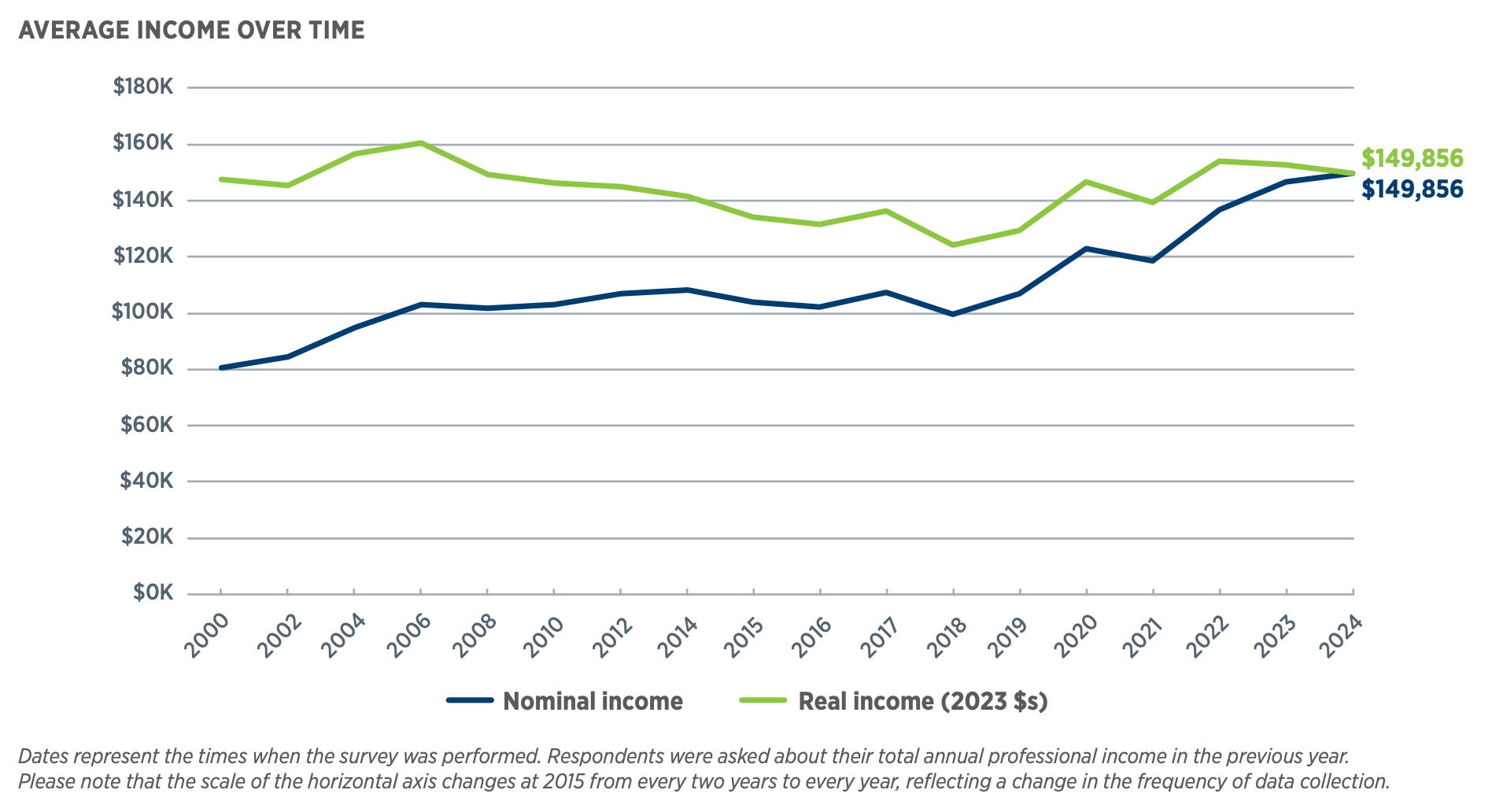
In fact, the average starting salary for a newly-graduated DVM in the US is $137,727. As a board-certified specialist that spent four years in internship and residency—plus a PhD, NBD—I made $135,000 at a corporate diagnostic lab in 2020. Anecdotally, the salaries for clinical pathologists since COVID only seem to be going down: I have seen multiple recent postings on LinkedIn for <$100,000!
If you want to get really depressed, I personally know promising young clinical pathologists who are leaving our field to work in general practice, since it pays 30-50% better. What an absolute waste of their time and talent 😔
Underutilized Skills, Disruption from AI
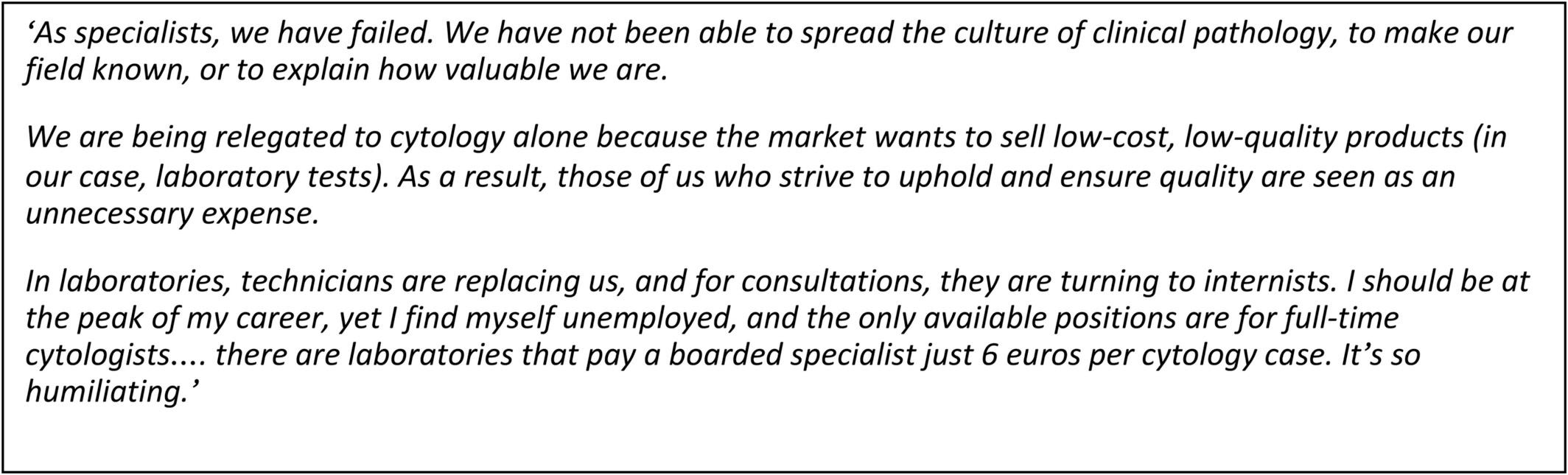
A cornerstone of career satisfaction is feeling like you are doing a good job and making a difference in the world. Sadly, many clinical pathologists feel unappreciated. Our residencies include a large amount of training in clinical chemistry, assay development, and quality assurance. Yet many, if not most, clinical pathologists spend their time doing one small task (cytopathology), and other personnel with less education in certain areas are taking over:
And finally, as if the shrinking scope of responsibility and poor compensation weren’t bad enough, to add insult to injury these very same diagnostic companies are now trying to automate away the rest of our job description with AI to cut costs:
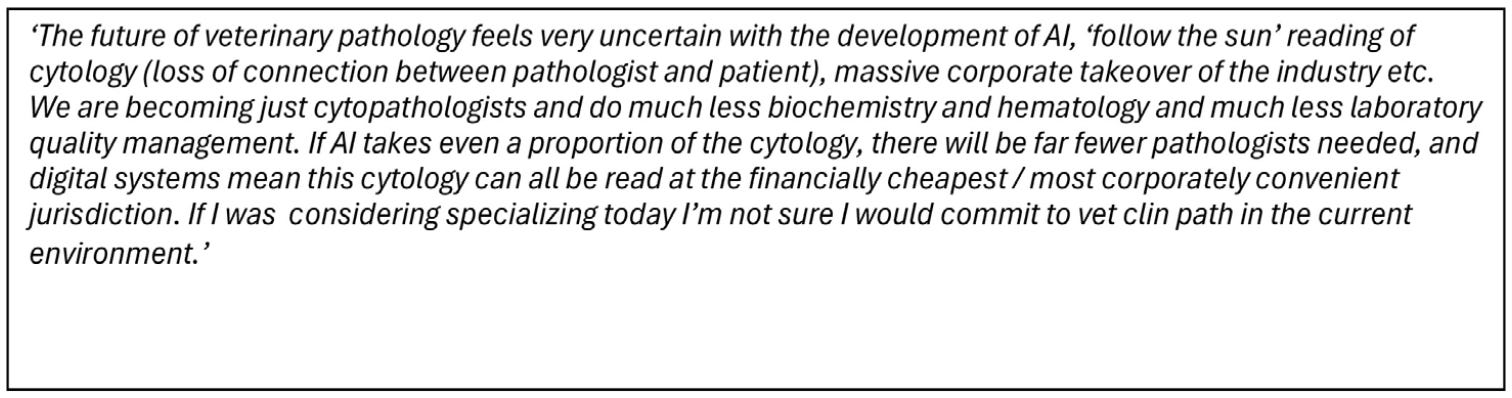
Talk about de-humanizing!
What Can We Do About This?
In my opinion, this survey confirms what I’ve long suspected: that veterinary clinical pathology is a field in jeopardy. In some ways, we have done this to ourselves. Many pathologists are conflict-avoidant and terrified to rock the boat when they are mistreated. Some older pathologists who ran successful independent labs sold out to corporate groups for a large retirement pay day. And many of us neglect the business side of the profession, leaving it to outsiders who do not have the best interests in mind for either us, practicing vets, or pets and their owners. These trends are bleak, and reversing them won’t be easy or happen overnight. However, I do have a few suggestions for different audiences:
Clinical Pathologists
Share this study and discuss! Be willing to talk about compensation with your co-workers; taboos about discussing pay only give power to management
Advocate for yourself in your workplace. If a situation is too toxic, leave. No job is worth your mental health
Even better—get involved in management and/or our specialty organizations. We have ceded control to MBAs without relevant medical experience for too long
Negotiate: They only offer these low salaries because enough people take them. If more people say no, they will have to raise the offering
Anatomic Pathologists
Did you know there is an almost $30,000 gap in pay between anatomic and clinical pathologists?! Show solidarity with your CP colleagues in meetings with management or if you are in charge of hiring
Veterinarians
You should also share this survey! More awareness always helps
Consider patronizing independent labs instead of corporate ones. They may be a little more expensive, but you will get a more personal touch and better service
Know that a slick salesperson may tell you that their AI-box is as good or better than an experienced pathologist, but there is a technical term for that: bullshit
Keep burnout in mind when you opt to send in 30 slides for a case…
Management
Remember that these are real people’s lives when you are trying to reduce “cost centers” by putting artificially low ceilings on pay
I dunno, maybe stop trying to replace us with crappy AI that will hurt patients? (Just a thought)
Author’s Note: The commentary above represents my personal opinion and does not necessarily reflect the viewpoints of any current or previous employers.

Full citation: K.Freeman, Z.Polizoupoulou, K.Papasouliotis, and M.Rishniw, “European Veterinary Clinical Pathologists Workplace Wellbeing Survey,” Veterinary Clinical Pathology (2026): 1–9, https://doi.org/10.1111/vcp.70084.
This is pure speculation, but my guess as to why a survey like this came from the smaller European college instead of the much bigger North American market comes down to (a) timidity of the equivalent US organizations in asking these questions publicly, and (b) greater employee freedom to participate in such a study without fear of reprisal.
This is an extraordinarily high response rate for busy specialists. This tells us several things. First, these results are likely broadly representative of the sampled population; it isn’t a small minority of people skewing results. And second, I would suspect the general dissatisfaction expressed throughout their survey responses motivated more people than usual to participate.
Thanks for bringing this to my attention Eric.
Kudos to Dr. Kathy Freeman for doing the survey and reporting her findings in a letter to the editor.
Drawing on my experience as both an employee and as a pathology manager, I agree with her that career dissatisfaction is widespread, even global.
To me, this indicates that the problems are systematic.
Too much demand for the available workforce, inept management and limited job opportunities/employers.
The disconnect is that clinical pathologists, rather than being treated as a treasured and critical laboratory professionals are being used like a borrowed mule. Terms like "moral injury" become meaningful.
I think that the system cannot self heal. It will take an outside influence: government regulations or formation of a professional union, to change the trends.
Jim
P.S. Working from home, in my opinion, is a career killer. Sitting all alone in a bedroom or basement for 20+ years sounds like a punishment rather than an exciting career.